





Listen to the Audio Version
Quality grading in aromatic raw materials is one of the most under-discussed topics in the fragrance and wellness supply chain. Buyers routinely overpay for misrepresented goods or unknowingly incorporate substandard material into finished products, often because no consolidated reference exists on how grades are actually differentiated. Olibanum oil presents a particularly sharp example of this challenge. The commercial landscape for this material spans everything from pharmaceutical-grade steam distillates to low-purity industrial fractions and each tier carries significantly different chemical profiles, regulatory implications and end-use suitability.
BMV Fragrances, a leading manufacturer, exporter and wholesale supplier of Olibanum Oil in India, has built its reputation on supplying clearly graded, fully documented olibanum materials to clients across the globe. The grading framework that experienced buyers rely on when assessing olibanum is precisely what informs BMV Fragrances' sourcing standards and product classification - and understanding it thoroughly equips any buyer to make better decisions, regardless of where in the supply chain they operate.
What makes grading especially complex is that olibanum itself exists in multiple processed forms well before it reaches a buyer. Steam-distilled essential oil, solvent-extracted resinoid, reconstituted blends and raw gum all travel under the broader umbrella of "olibanum" in commercial documentation. Without clarity on which form is being discussed, any grade comparison is immediately ambiguous. This guide addresses that ambiguity directly, walking through the principal forms of olibanum materials, the criteria used to assess quality at each tier and how to practically evaluate what you are buying.
 Call Us Now!
Olibanum Oil Forms: Understanding What You Are Actually Buying
Before grading can be meaningfully applied, it is essential to establish which material form is under evaluation. Olibanum oil - the steam-distilled essential oil derived from Boswellia resin - is only one of several commercially traded derivatives. The olibanum resinoid, produced through solvent extraction, retains a broader aromatic profile including heavier resin acids, making it structurally and functionally distinct from the distilled oil. Then there is the reconstituted form, an engineered blend designed to approximate a natural profile using isolated or synthetic components. Finally, raw olibanum gum, the dried exudate from Boswellia trees, is traded as a precursor material in its own right.
Each of these forms has its own grading criteria and appropriate application range. Mixing up the vocabulary used to describe them - or accepting a certificate of analysis for one form when you ordered another - is one of the most common sourcing errors in the global market. A buyer specifying natural olibanum for a therapeutic application needs to verify not only the origin and botanical source but also the extraction method, since solvent residues in an olibanum resinoid would disqualify it for certain inhalation-based end uses.
BMV Fragrances maintains distinct product classifications for each of these forms, ensuring buyers receive exactly the material type they specify - with documentation that matches the actual product shipped, not a generic certificate applied across multiple material categories.
Olibanum Reconstitution: How Blending Affects Grade Classification
Olibanum reconstitution is a commercially widespread practice that is often poorly disclosed in supply chains. A reconstituted product is built from a combination of natural isolates, possibly some genuine olibanum fractions and synthetic aroma chemicals designed to replicate the gas chromatographic profile of the natural oil. High-end reconstitutions are used by fragrance houses to ensure consistency when natural material is variable or temporarily in short supply. Lower-end versions circulate as supposed "natural" olibanum oil and are the primary source of quality complaints and mislabeling in the global market.
From a grading standpoint, the central question is whether olibanum reconstitution is disclosed or undisclosed. When disclosed, the product should be assessed on its own terms - evaluating the accuracy of the reconstitution against a natural reference standard, the quality of the individual components used and its fitness for the intended application. Undisclosed reconstitution is adulteration and no grading framework applies; the product fails at the authenticity level before any further quality criteria can even be considered.
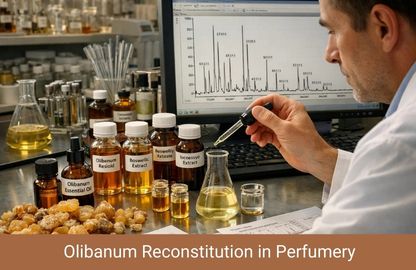
BMV Fragrances operates with full transparency on this point. Reconstituted materials are clearly labelled and classified separately from natural grades, ensuring that buyers sourcing for therapeutic or certified-natural cosmetic applications are never inadvertently supplied a blended product. That level of classification discipline is what separates a reliable wholesale supplier from a commodity trader.
Read Our Article
The Role of Olibanum Synthetic Oil in Enhancing Products Across AsiaNatural Olibanum Assessment: The Role of Origin and Harvest Conditions
The designation natural olibanum implies botanical authenticity and an absence of synthetic components, but within that category, quality varies enormously based on geographic origin, the Boswellia species involved, the tapping season and post-harvest handling practices. These variables are the primary drivers of grade differentiation among genuinely natural materials and they are rarely documented with sufficient detail in standard commercial transactions.
Boswellia sacra from Oman and Yemen - particularly material from the Dhofar region - is widely regarded as the reference point for therapeutic-grade natural olibanum. Its essential oil is characterised by a high concentration of alpha-pinene alongside a notably elevated octyl acetate content, producing the distinctive sharp-sweet and slightly camphoraceous aroma associated with classical frankincense. By contrast, Boswellia carterii from the Horn of Africa produces an oil with a somewhat earthier, more citrus-forward profile that lends itself well to cosmetic and fragrance applications but is generally considered a secondary tier for strict therapeutic grading.
Harvest timing also matters substantially. Resin tapped during the optimal season - generally early in the tapping cycle - produces higher yields of the lighter aromatic fractions that give therapeutic-grade material its characteristic clarity and brightness. Resin collected late in the season or from over-tapped trees, tends to be darker, less aromatic and higher in non-volatile residue, yielding an oil that tests as authentic but underperforms against therapeutic standards. BMV Fragrances maintains close relationships with resin suppliers across sourcing regions to track harvest conditions and tapping cycles, which is one of the reasons its natural olibanum consistently meets the specifications of international pharmaceutical and cosmetic manufacturers.
Olibanum Gum Quality: The Foundation Grade That Determines Everything Downstream
Every processed olibanum product begins with olibanum gum and the quality of the raw material sets an absolute ceiling on what any downstream product can achieve. A processor working with low-grade gum cannot produce therapeutic-grade essential oil regardless of how carefully the distillation is managed. Understanding gum grading is therefore critical for buyers evaluating supply chain integrity rather than just finished-product specifications.
Commercial olibanum gum is graded primarily on the basis of color, tear size, dust content and volatile oil percentage. Premium grades - often designated in trade documentation as "hojari" for Omani material or "grade 1" for East African sourcing - exhibit pale yellow to greenish-white coloration, large intact tears, minimal bark and dirt contamination and a volatile oil content of 8% or higher. This high volatile fraction is what translates directly into distillation yield and aromatic quality in the finished oil.
Lower olibanum gum grades are characterised by darker coloration ranging from amber to dark brown, smaller or powdered tears with high dust fractions, significant bark content and volatile oil percentages that may fall below 5%. This material is suitable for incense manufacturing and certain industrial fragrance applications where cost efficiency is the priority, but it is entirely inappropriate as a source material for therapeutic or premium cosmetic oils. Suppliers who blend these grades during processing - combining premium and lower-grade gum to average out procurement costs - produce a finished oil that may pass basic authenticity testing while still falling short of grade-specific standards. BMV Fragrances processes its olibanum gum grades separately from intake through to finished product, maintaining grade segregation throughout the production chain.
Our Other Product
Benzoin SumatraOlibanum Oil Grading for Therapeutic Use: The Criteria That Actually Matter
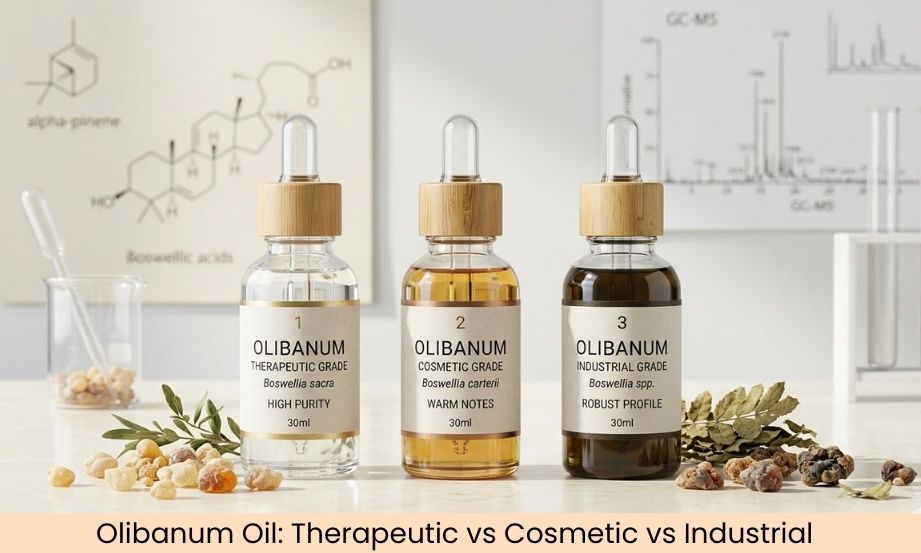
Therapeutic-grade olibanum oil is the most demanding quality tier and it is also the tier most frequently misrepresented in marketing materials. The core evaluative criteria for therapeutic classification go well beyond basic purity testing and encompass several interrelated parameters that must be assessed together rather than individually.
Botanical verification is the starting point. The Boswellia species must be confirmed, as different species produce oils with different chemical profiles and different bodies of published research behind them. Species substitution - selling Boswellia papyrifera oil as Boswellia sacra, for example - is commercially common because the former is far more abundant and less expensive, while the chemical profiles differ meaningfully at the therapeutic application level. Isotope ratio analysis and chiral GC analysis can detect such substitutions where standard GC-MS alone may not be sufficient.
Distillation parameters are the second critical variable. Therapeutic-grade oil should be produced through low-pressure steam distillation at temperatures that preserve heat-sensitive constituents. High-temperature or pressurized distillation increases yield but degrades the oxygenated compound fraction - particularly linalool and the acetate esters - that carry the most highly valued aromatic and functional characteristics. Processors serving the therapeutic market should be able to document their distillation parameters on request; those who cannot are a commercial risk for any buyer making therapeutic-grade claims about their finished products.
Oxidation status is the third parameter that separates genuine therapeutic-grade product from material that may have been certified correctly at production but degraded through improper storage or long transit times. Peroxide values and acid values measured at the time of purchase, rather than at the time of production, give a far more accurate picture of current quality and remaining shelf utility. BMV Fragrances provides freshly tested documentation at the time of shipment, not certificates generated months earlier against a different lot.
Olibanum Oil in Cosmetic-Grade Applications: What Formulation Science Requires
Cosmetic-grade olibanum oil sits in the middle tier of the quality spectrum. It must meet safety and purity standards appropriate for dermal application but is not held to the same species authentication or distillation-parameter documentation requirements as therapeutic material. For cosmetic grading, the focus shifts toward skin-safety profile, batch-to-batch consistency and absence of known sensitizers at concentrations that would trigger regulatory concern in target markets.
For formulation chemists working with olibanum in leave-on cosmetics - serums, creams or facial oils - IFRA limits on specific terpene compounds apply. Alpha-pinene and limonene, both major components of any genuine olibanum oil, can form allergenic oxidation products when products are stored improperly or used near their expiry. High-quality cosmetic-grade material will have been distilled and packaged with appropriate antioxidant stabilisation where indicated and the supplier should provide stability data relevant to the intended product format. BMV Fragrances works with cosmetic formulators at the specification stage, providing the technical data needed to support regulatory submissions in EU, US and GCC markets.
Cosmetic-grade olibanum does not require the stringent origin documentation expected in therapeutic sourcing, but it does require more rigorous safety dossier support than industrial-grade material. Buyers sourcing for cosmetic applications should treat IFRA compliance documentation, safety data sheets and full allergen declarations as minimum requirements - not optional additions to a purchase order.
Olibanum Oil in Industrial Applications: Where Lower-Grade Material Fits Appropriately
Industrial-grade olibanum encompasses a broad range of applications including incense manufacturing, religious and ceremonial products, industrial air freshening systems and bulk fragrance compounding for products not subject to cosmetic regulation. The quality threshold for industrial applications is the lowest across the three tiers and this is entirely appropriate - the performance requirements are different, not deficient.
Industrial buyers typically prioritise aromatic impact at a favorable cost level rather than chemical authenticity documentation. For incense applications, the odor performance of a given olibanum material when burned is the primary evaluation criterion, assessable through simple organoleptic testing rather than GC-MS analysis. Material that would not qualify for therapeutic or cosmetic grading - due to elevated bark content in the source gum or off-notes from suboptimal distillation - may still perform very well as an incense-grade ingredient where the combustion process itself transforms the aromatic profile.
The principal grading concern in industrial applications is accurate labeling and appropriate supply chain positioning. Industrial-grade material must not enter product formulations making therapeutic or cosmetic claims. BMV Fragrances, as a wholesale supplier serving multiple market segments, maintains strict internal classification to ensure that industrial-grade olibanum gum derivatives are correctly routed to appropriate end-use categories and are never inadvertently substituted for higher-tier grades in the fulfillment process.
Olibanum Oil Documentation: The Paper Trail That Separates Grades in Practice
Beyond the chemical and physical parameters discussed above, the documentation package accompanying an olibanum shipment is itself a meaningful grading signal. Suppliers operating at the therapeutic-grade level will routinely provide GC-MS analysis reports with component identification and quantification, specific optical rotation data, refractive index measurements organoleptic descriptions, country of origin with botanical certification and in high-stakes transactions, isotope ratio analysis for species and origin verification.
Cosmetic-grade suppliers add IFRA conformance letters, safety data sheets and where applicable, REACH registration documentation for the EU market. Industrial suppliers may provide only a basic certificate of analysis with key physical parameters and a brief odor assessment note. When a supplier cannot or will not produce documentation commensurate with the claimed grade of their product, that mismatch is itself a quality indicator worth acting on.
BMV Fragrances supports all three documentation tiers from a single supply relationship, which is a practical advantage for buyers who source multiple product grades or serve customers across different regulatory environments. Consolidating olibanum sourcing with a single qualified supplier reduces audit burden, simplifies documentation workflows and ensures that grade-to-documentation alignment is maintained consistently across orders rather than being validated ad hoc for each new shipment.
Buyers should also be aware that documentation can be fabricated or reused across batches by less scrupulous traders. Requesting that certificates reference the specific batch or lot number being purchased and verifying that the issuing laboratory is third-party rather than in-house, are basic but often overlooked due diligence steps. In high-value therapeutic sourcing, commissioning an independent re-analysis of received material against the supplier's certificate is a reasonable practice for any new supplier relationship - and one that reputable suppliers, including BMV Fragrances, actively welcome rather than resist.
Conclusion
Navigating olibanum oil grades requires far more than a label check - it demands a working knowledge of the material form, extraction method, source resin quality and the documentation standards that legitimately validate each claimed tier. Whether sourcing pure olibanum for therapeutic end uses, olibanum resinoid for fine fragrance, natural olibanum for cosmetic formulation or olibanum gum derivatives for industrial applications, the grading criteria differ in substance and not merely in degree. BMV Fragrances brings together the sourcing relationships, processing controls and documentation infrastructure needed to supply correctly graded olibanum materials to buyers at every tier - making it a dependable partner for manufacturers, formulators and traders who require both quality assurance and supply reliability from a single, accountable source.
FAQs
Olibanum Oil is commercially available in therapeutic, cosmetic and industrial grades, each carrying distinct chemical profiles and end-use requirements. The grade is determined by source resin quality, extraction method, distillation parameters and the depth of analytical documentation provided.
Pure Olibanum confirms the absence of adulterants, synthetic extenders and carrier oils, verified through GC-MS analysis against established component reference ranges. However, purity alone does not guarantee therapeutic quality - species origin, distillation conditions and oxidation status must also be assessed.
Olibanum Resinoid is produced through solvent extraction, retaining heavier aromatic fractions not captured by steam distillation, making it valuable for fragrance and cosmetic applications. Grading is based on residual solvent levels, physical consistency, odor complexity and compliance with applicable regulatory thresholds.
Olibanum Reconstitution refers to blending natural isolates and synthetic aroma chemicals to replicate the profile of the natural oil, a practice that must be fully disclosed by the supplier. Undisclosed reconstitution is considered adulteration and disqualifies the product from therapeutic or certified-natural cosmetic classifications.
Natural Olibanum quality differs significantly by Boswellia species and harvest region, with Boswellia sacra from Oman's Dhofar region widely regarded as the therapeutic-grade reference standard. Resin tapped early in the season yields higher concentrations of light aromatic fractions, while late-season or over-tapped material produces darker, less volatile oil.
Olibanum Gum quality sets an absolute ceiling on every downstream product - premium pale-colored gum with a volatile oil content above 8% is required to produce therapeutic or cosmetic-grade oil. Low-grade gum with high bark content and volatile fractions below 5% is only appropriate for industrial and incense-grade applications.
Therapeutic-grade Olibanum Oil should be supported by GC-MS analysis reports, optical rotation data, refractive index measurements, botanical certification and country of origin documentation, all referencing the specific production batch. Freshly issued certificates at the time of shipment, rather than older documents applied across multiple lots, are the correct standard.
Resinoid Olibanum captures high molecular weight terpenoids and heavier esters that contribute deep balsamic dry-down notes prized in fine fragrance formulation. For cosmetic use, it must meet residual solvent limits under IFRA and EU cosmetic regulations, supported by a complete safety dossier from the supplier.
Industrial-grade Olibanum Oil is assessed primarily on aromatic performance and cost efficiency rather than species authentication or distillation-parameter documentation. It is appropriate for incense manufacturing, air freshening systems and non-regulated fragrance compounding, but must never be substituted into therapeutic or cosmetic product formulations.
BMV Fragrances maintains strict grade segregation from raw Olibanum Gum intake through to finished product, with documentation packages tailored to therapeutic, cosmetic and industrial buyer requirements. As a leading manufacturer, exporter and wholesale supplier of Olibanum Oil in India, BMV Fragrances supplies verified, correctly graded material to clients across global markets.
Recent Posts
- Indian Oud Reconstitution vs. Natural Oud: Cost Effectiveness, Performance, and Quality Comparison for Bulk Buyers
- Floral Green Fragrance Bases: Formulating With Narcissus Absolute Alternatives in Modern Perfumery
- Reconstituted Oud Blending Guide: Dihydroambrettolide, Benzyl Acetone, and Ester Based Components for Professional Fragrance Formulation
- Geranium Oil Varieties Egyptian Reunion and Madagascar Geranium Compared
- Frankincense Serrata in Premium Incense Manufacturing
- Balsam Tolu vs Balsam Peru
- Vetiver Oil in Fresh Green and Woody Fragrances
Copyright @ 2026 | BMV Fragrances Private Limited | All Rights Reserved
Website Design & Digital Marketing by webmasterindia.
Website Updated On: