





Listen to the Audio Version
How Perfume Houses Source, Evaluate, and Specify Amyris?
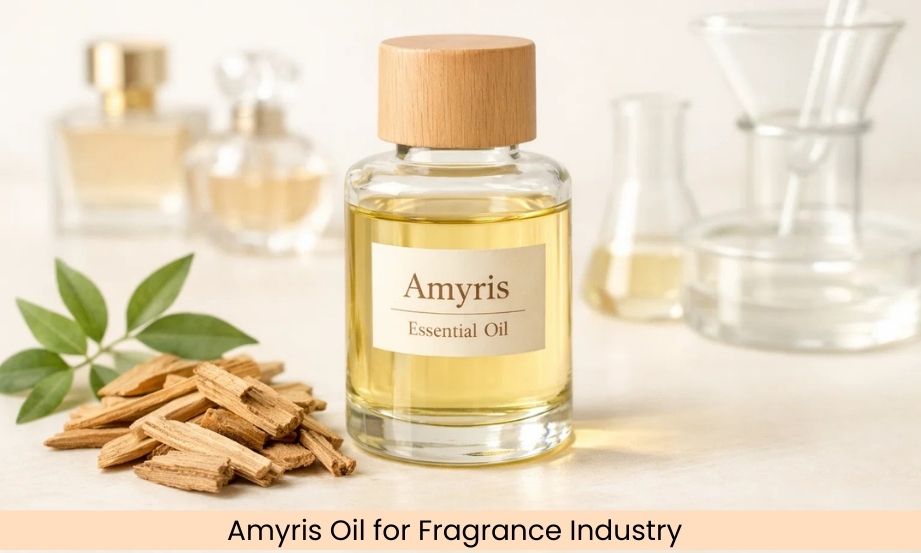
Amyris oil (Amyris balsamifera) is a commercially significant woody base material used across fragrance categories from fine perfumery and personal care to home fragrance and functional products. For procurement teams and ingredient buyers at fragrance houses, amyris presents a distinct combination of advantages: it is relatively affordable, available in volume, sustainably sourced, and technically useful as both a base note and fixative. At the same time, its quality varies meaningfully between suppliers and origins, and its specification within a fragrance house requires careful attention to chemical standards, sensory benchmarks, and supply chain documentation.
This article provides a comprehensive reference for professionals involved in sourcing, evaluating, and specifying amyris oil — from the initial supplier qualification process through to in-house sensory and analytical assessment, specification writing, and ongoing supplier management. It is published by BMV Fragrances, a leading manufacturer, exporter, and wholesale supplier of Amyris Oil in India, supplying fragrance houses, cosmetic brands, and ingredient buyers across the globe.
Market Position and Commercial Significance
Where Amyris Sits in the Global Ingredient Market
Amyris oil occupies a mid-tier position in the global essential oil trade ─ above commodity aromatics like clove leaf or eucalyptus in perceived quality, but well below premium botanicals such as Mysore sandalwood, rose absolute, or orris root in cost and scarcity. This positioning makes it a workhorse ingredient: one that appears in dozens of formula categories and is purchased in significant volume by fragrance houses of all sizes.
Global production is estimated between 200 and 400 metric tonnes annually, with Haiti accounting for the dominant share. Price per kilogram at wholesale typically ranges from USD 10 to USD 35 depending on grade, origin certification, and supplier tier ─ a fraction of the cost of the sandalwood materials it can complement or partially substitute.
Primary Application Categories
Amyris appears across a wide range of product categories in the fragrance industry. Understanding its distribution helps procurement teams prioritise where specification rigour is most critical:
| Application Category | Role of Amyris | Typical Use Rate | Volume Sensitivity |
|---|---|---|---|
| Fine Fragrance (EDC/EDP/Parfum) | Base note, fixative, sandalwood support | 3–15% | Low volume, high spec |
| Mass-Market Fragrance | Woody base, cost-of-goods management | 5–20% | High volume, cost-driven |
| Personal Care (body wash, lotion) | Substantive woody note, skin-feel | 0.5–3% | Very high volume |
| Home Fragrance (candles, diffusers) | Woody warmth, burn performance | 5–25% | High volume |
| Hair Care | Woody dry-down, substantivity | 0.2–1% | High volume |
| Functional Fragrance (cleaning) | Base fixative under citrus/floral | 2–8% | Very high volume |
Relationship to Synthetic Alternatives
Procurement teams frequently evaluate amyris alongside synthetic woody materials including Amyris Clearwood (IFF), Javanol (Givaudan), Sandalore, and Ebanol. These synthetics offer superior batch consistency and often higher olfactory impact in specific directions (milkier, crisper, or more diffusive than natural amyris). However, amyris retains commercial advantages that synthetic alternatives cannot fully replicate:
- Natural and 'clean beauty' label compliance — amyris is acceptable in natural, organic, and 'free-from-synthetics' product lines where Javanol and Sandalore are not.
- Complexity of odour — natural amyris carries trace compounds absent in synthetics that contribute to a richer, more nuanced base.
- Regulatory trajectory — natural materials face different (and in many ways more stable) regulatory environments than some synthetics, which are subject to ongoing IFRA and EU restriction reviews.
- Consumer storytelling — the provenance narrative (Haitian distillation, sustainable wood) has marketing value in premium product positioning.
Read Our Article
How to Source Amyris Oil?Supply Chain Structure and Sourcing Strategy
The Amyris Supply Chain: Key Actors
Understanding the structure of the amyris supply chain is prerequisite to building a resilient sourcing strategy. The chain has four principal tiers:
| Tier | Actor | Location | Function |
|---|---|---|---|
| 1 — Origin | Distillers / Cooperatives | Haiti, Honduras, Guatemala | Produce crude amyris oil from wood feedstock |
| 2 — Exporter | Commodity trading houses | Haiti, USA, France | Aggregate, quality-check, and export in bulk drums |
| 3 — Processor/Broker | Essential oil brokers, rectifiers | USA, UK, France, Germany, India | Rectify, standardise, repackage, certify |
| 4 — Direct Supplier | Certified ingredient suppliers | Global (to spec) | Supply to fragrance house against defined specification |
Most fragrance houses source from Tier 3 or Tier 4 suppliers, relying on them to manage traceability back to Tier 1. However, houses with a strong naturals commitment ─ or significant volume requirements ─ increasingly pursue direct relationships with Tier 1 or 2 actors, allowing for origin exclusivity, custom distillation parameters, and better cost management.
Strategic Consideration for Procurement
Direct sourcing from Haitian distilleries or cooperatives requires investment in on-the-ground relationship management, quality control at origin, and logistics expertise. For houses purchasing more than 5–10 MT of amyris annually, the economics typically justify a direct sourcing programme. Below that threshold, a well-qualified Tier 3 or 4 supplier relationship is usually more efficient.
Key Sourcing Geographies
Haiti remains the benchmark origin for amyris oil and the one most likely to be specified by name in fragrance formulas or marketing materials. However, buyers should maintain awareness of secondary origins as supply diversification insurance:
| Origin | Volume | Olfactory Profile | Notes for Buyers |
|---|---|---|---|
| Haiti (primary) | Dominant, ~70–80% of global supply | Warm, creamy, classic amyris character | Preferred specification origin; GC/MS benchmarks established against Haitian material |
| Honduras | Growing, ~10–15% | Slightly greener, less milky opening | Useful as volume backup; may require sensory re-qualification |
| Guatemala | Small, ~5% | Variable; closer to Haitian profile | Limited traceability infrastructure; use with careful supplier vetting |
| Other Caribbean | Marginal | Variable | Treat as non-standard; full re-qualification required |
Supplier Qualification Framework
Before approving any new amyris supplier, a fragrance house should conduct a structured qualification process. The following framework represents current best practice for ingredient buyers:
Stage 1: Documentation Review
- Certificate of Analysis (CoA) for minimum three recent batches
- GC/MS report with full composition breakdown (not just key markers)
- Safety Data Sheet (SDS) current to REACH / GHS standards
- Origin declaration and, where available, traceability documentation to named distillery
- IFRA compliance statement
- Organic, natural, or sustainability certifications (as applicable to intended use)
Stage 2: Analytical Assessment
- Run in-house GC/MS against approved reference standard
- Verify valerianol at 30–50% of total composition (primary quality marker)
- Confirm absence of adulterants: cedarwood fractions, synthetic sesquiterpenes, diluent oils
- Check specific gravity (0.940–0.965 at 20°C) and refractive index (1.503–1.513)
- Conduct accelerated stability testing if new supplier or formulation context
Stage 3: Sensory Evaluation
- Panel assessment against approved house standard on blotter and skin
- Comparative evaluation against minimum two alternative supplier samples
- Assessment in formula context: test in at least one representative base
- Stability odour check at 4 weeks / 40°C in isopropyl alcohol solution
Stage 4: Commercial and Compliance Review
- Price negotiation and volume commitment discussion
- Lead time and minimum order quantity confirmation
- Regulatory compliance confirmation for target markets (EU, US, Japan, GCC)
- Audit scheduling (on-site or remote via questionnaire)
Our Other Product
Bakhoor IngredientsAnalytical Specification and Quality Standards
Writing an Amyris Oil Specification
A well-written amyris specification is the foundation of consistent supply. Vague or under-specified materials create the conditions for substitution, adulteration, and batch-to-batch variation that undermine formula performance. The following table represents a recommended specification framework for amyris oil used in fine fragrance applications:
| Parameter | Specification / Acceptance Criteria |
|---|---|
| Botanical name | Amyris balsamifera L. (Rutaceae) |
| Plant part | Wood (dried chips and sawdust) |
| Extraction method | Steam distillation |
| Origin (preferred) | Haiti |
| Appearance | Clear to pale yellow liquid; no visible haze or particulate |
| Odour character | Warm, woody, creamy-balsamic; soft smokiness on opening; clean sandalwood-like dry-down |
| Specific gravity (20°C) | 0.940 – 0.965 |
| Refractive index (20°C) | 1.503 – 1.513 |
| Optical rotation | -4° to +4° |
| Valerianol content | Minimum 30% (GC/MS) |
| Elemol + eudesmols | Present; combined minimum 15% (GC/MS) |
| Known adulterants | Absent: cedarwood fractions, diluent oils, synthetic sesquiterpenes |
| Heavy metals | Per regional regulatory requirements (typically <10 ppm Pb, <1 ppm As, Cd, Hg) |
| Pesticide residues | Per relevant pharmacopoeial standard or buyer requirement |
| Microbial limits | Total aerobic count ≤100 CFU/mL; no pathogens |
| IFRA compliance | Compliant with current IFRA guidelines; letter on file |
| Documentation required | CoA, GC/MS, SDS, origin declaration, IFRA letter per batch |
GC/MS Interpretation for Procurement Teams
Gas chromatography/mass spectrometry analysis is the primary analytical tool for amyris quality verification. Procurement teams do not need to be analytical chemists, but understanding how to read a GC/MS report is essential for supplier evaluation.
Key markers to verify in any amyris GC/MS report:
- Valerianol (also called valerianole or 10-epi-gamma-eudesmol in some reports): Should be the dominant peak, typically 30–50%. Consistently low valerianol (<25%) suggests diluted or adulterated material.
- Elemol: Typically 5–15%. Contributes to the woody-earthy character; absence is unusual and may indicate non-standard material.
- Gamma-eudesmol and beta-eudesmol: Supporting sesquiterpenes at 5–15% combined. Important for the rounded character of authentic oil.
- Unexpected peaks: Unusual peaks in the C15 sesquiterpene region (especially cedrol, thujopsene, or alpha-cedrene) may indicate adulteration with cedarwood fractions ─ a common and economically motivated practice.
Red Flag
A GC/MS report showing very high valerianol (>60%) with minimal supporting sesquiterpenes may indicate a rectified or stripped material, or a synthetic valerianol blend. Authentic natural amyris has a complex, multi-peak profile. Suspiciously 'clean' reports warrant request for additional authentication testing.
Sensory Specification and Reference Standards
Analytical data confirms composition; sensory evaluation confirms character. Both are necessary. A fragrance house should maintain a physical reference standard for amyris oil ─ a sealed, documented sample of approved material held in controlled storage ─ against which all new batches are assessed.
Recommended sensory evaluation protocol:
- Blotter assessment: 1 strip per sample, evaluated at 0 minutes, 30 minutes, and 2 hours.
- Comparative panel: minimum three trained evaluators; blind assessment against reference.
- Skin assessment: applied at 5% in dipropylene glycol on inner wrist; evaluated at 1 hour and 4 hours.
- Formula assessment: evaluated at 10% incorporation in a standard woody base accord.
- Pass/fail criteria: no significant deviation from reference on opening, heart, or dry-down; no off-notes (chemical, rancid, musty, or petroleum-like).
Regulatory and Compliance Landscape
IFRA Status and Restrictions
As of the 49th Amendment to the IFRA Code of Practice, amyris oil carries no category-specific use restriction. It is listed as a substance that should comply with general IFRA principles of good manufacturing practice and safety substantiation, but there is no maximum use level mandated across product categories.
This is a significant commercial advantage over many other naturals and over some competing woody synthetics, which face category-specific limits in leave-on skin products. Procurement teams should maintain a current IFRA compliance letter on file from each approved supplier and ensure it is refreshed with each major IFRA amendment cycle.
EU Cosmetics Regulation
Under EU Cosmetics Regulation 1223/2009 and associated technical guidelines, amyris oil does not appear on the list of restricted or prohibited substances. It does not contain known regulated allergens at concentrations typically requiring declaration, though buyers operating in the EU market should verify this against the current list of 26 declarable contact allergens and the proposed extensions under the ongoing SCCS review.
For products marketed as 'natural' or 'organic' under COSMOS or NATRUE standards, amyris essential oil is an approved ingredient and may be listed on the INCI as Amyris balsamifera bark oil.
US and Global Market Compliance
In the United States, amyris oil is generally recognised as safe (GRAS) for its relevant applications and appears without restriction in the RIFM (Research Institute for Fragrance Materials) database, which serves as the primary safety reference for US fragrance ingredient use. Buyers supplying US personal care or fine fragrance channels should confirm RIFM file currency with suppliers.
For GCC (Gulf Cooperation Council) markets, amyris oil raises no known religious compliance issues and is compatible with halal-certified product lines, though buyers should obtain formal halal certification from an accredited body where this is a commercial requirement.
| Market / Standard | Status | Key Requirement for Buyers |
|---|---|---|
| IFRA (Global) | No restriction | IFRA compliance letter per batch |
| EU Cosmetics Reg. | Not restricted | Allergen declaration review; COSMOS-approved |
| US (RIFM/FEMA) | GRAS / no restriction | Current RIFM safety file confirmation |
| Japan (MHLW) | Permitted in cosmetics | Confirm with supplier for current listing |
| GCC / Halal | Compatible | Halal certification if required by customer |
| COSMOS / NATRUE | Approved natural ingredient | Supplier must hold relevant certification |
| REACH (EU) | Compliant; no SVHC listing | Confirm REACH registration with supplier |
Our Other Product
Costus Root OilFormulation Guidance for Perfumers
Technical Role in a Formula
This section is directed at staff perfumers and evaluators working within fragrance houses who need a technical framework for amyris use beyond basic application.
Amyris performs three distinct technical functions in a fragrance formula, and understanding which function is primary in a given composition determines optimal usage rate and blending approach:
| Function | Description | Optimal Rate | Best Paired With |
|---|---|---|---|
| Primary wood note | Amyris as the dominant base material | 12–22% | Cedar, benzoin, frankincense, labdanum |
| Fixative / extender | Supporting other base notes, extending longevity | 5–10% | Sandalwood, vetiver, musks, resins |
| Bridging / smoothing | Softening harsh base notes, improving coherence | 3–7% | Vetiver, costus, ISO E Super, Iso E |
Behaviour Across Fragrance Families
Fine Fragrance: Oriental and Woody Oriental
This is the category where amyris oil delivers maximum technical and aesthetic value. In oriental structures anchored by labdanum, benzoin, vanilla, and resinous base materials, amyris adds the dry woody dimension that prevents sweetness from dominating. At 10–18%, it creates a sustained, warm base that performs well through the 6–8 hour wear cycle expected in fine fragrance. In woody orientals where sandalwood is the aspirational base material, amyris at 8–12% blended with Australian or New Caledonian sandalwood at 5–8% creates a composite wood accord that delivers more complexity than either material alone.
Fine Fragrance: Chypre and Modern Chypre
Classic chypre structures (oakmoss, labdanum, bergamot) benefit from amyris as a softening agent that reduces the animalic abrasion of labdanum while maintaining base depth. In modern 'clean chypre' constructions built around synthetic musks and patchouli, amyris provides the dry, woody dimension that anchors the composition without adding the heaviness of full-concentration patchouli.
Mass-Market and Personal Care
In high-volume applications, amyris is frequently specified as the primary natural wood note in otherwise synthetic structures. At 8–15% of the fragrance concentrate (which translates to very low actual use levels in finished product), it contributes sufficient woody warmth to read as natural and credible while keeping cost of goods manageable. In personal care rinse-off products, its substantivity means it performs better than lighter woody materials that are lost in rinsing.
Home Fragrance
Amyris behaves well in candle wax systems, performing better than some more volatile woody materials that lose character in the melt pool. It has a burn point compatible with soy and paraffin wax systems and contributes a warm, woody ambience that reads well in diffuser applications. At 15–25% of the fragrance load it can serve as the primary woody note in ambient scent compositions.
Known Incompatibilities and Cautions
- High-phenolic materials: At high concentrations, amyris can interact with eugenol-rich materials (clove, cinnamon leaf) to create an off-note that reads as medicinal. Keep eugenol-rich materials to under 5% of the formula when amyris is above 15%.
- Certain aldehydes: In aldehydic floral compositions, high amyris concentrations can dull the sparkle of aliphatic aldehydes. Keep amyris below 8% in classic aldehydic structures.
- Photo-instability: Amyris is not itself a phototoxic material, but in leave-on sun-exposed products, overall formula photo-safety assessment should not be assumed from amyris safety alone.
- pH sensitivity: In high-pH cosmetic bases (pH > 9), amyris may show stability issues over time. Conduct accelerated stability testing in the finished base.
Supplier and Exporter Landscape
Structure of the Global Amyris Supply Market
The amyris oil supply market is fragmented at origin and consolidated at the broker/distributor tier. This structure has implications for how fragrance houses build their supply strategy: origin-level differentiation is possible but requires active management, while the broker tier offers convenience and consistency at the cost of margin and traceability.
Manufacturer Tier: Distillers and Cooperatives at Origin
At the production level, amyris oil is manufactured by a dispersed network of small-to-medium distilleries across Haiti's southern departments, principally in and around the communes of Les Cayes, Jérémie, and Camp-Perrin. The majority operate as independent family enterprises, though some have been organised into cooperatives with external NGO or fair-trade support.
Key characteristics of the manufacturer tier:
- Typical batch sizes: 50–500 kg per distillation run
- Infrastructure: predominantly traditional copper or stainless steel pot stills; processing typically seasonal
- Quality consistency: highly variable between producers; a primary reason fragrance houses work through qualified exporters rather than direct
- Documentation: variable; best-in-class Haitian producers now provide basic CoA and GC/MS, but this is not universal
- Sustainability credentials: fair-trade and organic certification is available from specific cooperatives; premium above commodity price typically 15–30%
Exporter Tier: Aggregators and Trading Houses
Between the Haitian distillery and the international market sits a layer of exporters who aggregate production from multiple distilleries, conduct basic quality assessment, and consolidate into drums for international shipment. This tier is critical because it is where the first quality gate occurs and where blending across batches happens.
For fragrance house procurement teams, the exporter relationship matters primarily when sourcing directly from Haiti. Key evaluation criteria for exporters:
- Does the exporter maintain source documentation tracing each drum to named distilleries?
- Does the exporter conduct GC/MS analysis before export, or rely on visual and sensory assessment only?
- Is the exporter able to provide segregated, single-origin supply (rather than multi-source blends)?
- What are the exporter's storage and handling protocols between distillation and shipping?
Due Diligence Note
Exporter-blended amyris (material assembled from multiple small producers before export) is the norm rather than the exception in commodity trade. For most applications this is acceptable. For fine fragrance or 'single-origin' product marketing, procurement teams must explicitly specify single-distillery or single-cooperative sourcing and verify through documentation and periodic audits.
Supplier Tier: International Ingredient Distributors
The supplier tier is where most fragrance houses engage the amyris supply chain. International essential oil suppliers and ingredient distributors receive bulk amyris from exporters, may conduct further rectification or standardisation, add certified documentation layers, and supply to fragrance houses against defined specifications.
What differentiates a premium supplier from a commodity broker at this tier:
- Traceability: Can they name the exporter and, ideally, the cooperative or distillery of origin?
- Analytical rigour: Do they provide batch-specific GC/MS, or generic specification sheets?
- Regulatory currency: Are IFRA letters, SDS, and REACH documentation maintained on a current-batch basis?
- Stability data: Can they provide shelf-life data under different storage conditions?
- Certification: ISO 9001 quality management; additional sustainability certifications where relevant
- Responsiveness: Can they accommodate custom specifications, special certifications, or origin preferences?
| Supplier Profile | Best Suited For | Trade-off |
|---|---|---|
| Large global commodity broker | High-volume, cost-sensitive applications | Limited traceability; generic specs |
| Specialist natural oil supplier | Fine fragrance, natural product lines | Higher price; longer lead times |
| Certified organic/fair-trade supplier | COSMOS, natural beauty, ethical positioning | Premium cost; volume constraints |
| Direct from Haitian exporter | High volume; origin exclusivity; cost | Requires in-house QC; logistics complexity |
Maintaining a Dual-Source Strategy
Best practice in fragrance ingredient procurement is to maintain at least two qualified and approved suppliers for any ingredient used in significant volume. For amyris, this means qualifying two suppliers whose material meets your specification, negotiating volume commitments with each, and maintaining both in active production status (not merely 'approved in principle').
A practical dual-source framework for amyris:
- Primary supplier: Primary volume commitment; preferred origin (Haiti); full documentation tier
- Secondary supplier: Standby capacity; qualified against same analytical and sensory standard; used at minimum 15–20% of total volume to maintain relationship and production readiness
- Emergency source: A third, pre-qualified option whose material has been assessed against specification but from whom no current-volume business is placed; activatable within 4–6 weeks if primary/secondary supply is disrupted
Cost Management and Commercial Strategy
Price Drivers and Market Dynamics
Amyris oil prices are influenced by several factors that procurement teams should monitor as part of ongoing market intelligence:
- Haitian agricultural and political stability: Disruption to domestic logistics and production in Haiti (historically recurring) can restrict supply and push prices upward with limited warning. Maintaining 60–90 days of inventory buffer is prudent.
- USD/HTG exchange rate: Haitian distillers price in US dollars, but local cost structures are in gourdes. Dollar strengthening typically loosens supply and softens prices; weakening has the opposite effect.
- Timber industry activity: Amyris production is partly by-product-dependent. Periods of reduced timber activity reduce feedstock availability and can constrain distillation volume.
- Competing demand from pharma and cosmetics: Growing interest in amyris-derived compounds (particularly the sesquiterpene alcohol profile) from pharmaceutical and high-end cosmetics creates additional demand-side pressure that did not exist a decade ago.
Negotiation and Contract Structure
Given amyris oil's commodity-adjacent nature, procurement teams have meaningful leverage to negotiate favourable terms, particularly on volume commitments. Recommended contract provisions:
- Fixed-price annual contracts with volume commitment: Provides cost predictability and incentivises supplier to maintain reserved capacity. Typical price stability window: 12 months.
- Price review clauses tied to market indices: Rather than open-ended price renegotiation, tie review to published essential oil market indices or specific input cost indicators.
- Quality guarantee provisions: Supplier warrants that each batch meets specification; non-conforming material to be replaced at supplier cost within defined timeframe.
- Force majeure and supply continuity provisions: Explicit treatment of Haitian supply disruption events, with notice periods and buyer's right to activate secondary source without penalty.
Sustainability, Ethics, and Traceability
Sustainability Profile of Amyris
Amyris balsamifera is not currently listed on any CITES appendix, nor is it categorised as threatened or endangered by the IUCN. This baseline security distinguishes it from the supply risks that have historically affected sandalwood, oud, and other premium woody materials. However, 'not currently threatened' is not the same as 'sustainably managed at scale', and procurement teams should exercise appropriate diligence.
Positive sustainability indicators:
- The tree is a secondary species that regenerates readily; it is not dependent on old-growth forest.
- Production is significantly a by-product of timber operations, meaning dedicated cultivation for essential oil is not required.
- Fair-trade and organic certification programmes exist at cooperative level in Haiti, with premiums that provide measurable benefit to distilling communities.
Areas requiring ongoing attention:
- No industry-wide sustainability certification scheme exists specifically for amyris, unlike sandalwood (FSC certification programmes) or some other botanicals.
- Over-harvesting risk at localised level has been noted in some communities; buyers specifying single-origin material should verify that their named cooperative operates a replanting or managed-harvest programme.
- Supply chain transparency below the exporter tier is limited in conventional commodity sourcing; active traceability investment by fragrance houses is the primary mechanism for improvement.
 Call Now!
Community and Ethical Sourcing
Haiti is one of the world's most economically constrained nations, and the essential oil trade represents a meaningful livelihood for the communities involved in amyris production. Fragrance houses with responsible sourcing commitments should consider:
- Fair-trade premium payment structures: Ensure the price paid to Haitian producers reflects genuine fair-trade conditions, not merely market rate with a 'fair-trade' label on the drum.
- Direct community investment: Some fragrance houses have established direct programmes with Haitian cooperatives providing training, equipment, or community development support in exchange for supply relationships.
- Audit and verification: Periodic social audit (on-site or via third-party) of the cooperative or distillery network underpinning the supply chain.
Summary Reference Card for Procurement Teams
| Parameter | Summary |
|---|---|
| INCI name | Amyris balsamifera bark oil |
| Primary origin | Haiti (preferred); Honduras, Guatemala (secondary) |
| Key quality marker | Valerianol: minimum 30% by GC/MS |
| Specification anchors | SG 0.940–0.965; RI 1.503–1.513; GC/MS per approved profile |
| IFRA status | No restriction (49th Amendment) |
| Regulatory approvals | EU Cosmetics: approved; COSMOS: approved; GRAS (US) |
| Sustainability | Not threatened; fair-trade certification available |
| Recommended sourcing | Dual-source; 60–90 days buffer stock; annual contracts |
| Key application categories | Fine fragrance, personal care, home fragrance, functional |
| Synthetic alternatives | Clearwood (IFF), Javanol (Givaudan), Sandalore — for comparison only |
| Documentation per batch | CoA, GC/MS, SDS, IFRA letter, origin declaration |
| Red flags in supplier assessment | No GC/MS; low valerianol (<25%); cedar adulterants; no traceability |
Why Source Amyris Oil from BMV Fragrances?
BMV Fragrances is a leading manufacturer, exporter, and wholesale supplier of Amyris Oil in India, supplying fragrance houses, cosmetic manufacturers, perfumers, and ingredient buyers across the globe. Every aspect of this article — from supplier qualification standards to analytical specification benchmarks — reflects the quality commitments that BMV Fragrances brings to every shipment of amyris oil it produces and exports.
BMV Fragrances — Our Commitment to You
As a manufacturer, exporter, and wholesale supplier of Amyris Oil based in India, BMV Fragrances supplies global fragrance houses, cosmetic brands, and ingredient distributors with consistently high-quality amyris oil. We combine rigorous quality control, full documentation transparency, competitive pricing, and dependable export logistics — making BMV Fragrances the preferred sourcing partner for amyris oil across Europe, North America, the Middle East, Southeast Asia, and beyond.
Get in Touch with BMV Fragrances
If you are looking to source Amyris Oil from a reliable, quality-assured manufacturer and exporter in India, BMV Fragrances is ready to support your needs. We welcome enquiries from fragrance houses, procurement teams, ingredient buyers, cosmetic manufacturers, and distributors worldwide. Contact us to request a sample, obtain a quotation, or discuss your specific sourcing requirements.
Recent Posts
- Indian Oud Reconstitution vs. Natural Oud: Cost Effectiveness, Performance, and Quality Comparison for Bulk Buyers
- Floral Green Fragrance Bases: Formulating With Narcissus Absolute Alternatives in Modern Perfumery
- Reconstituted Oud Blending Guide: Dihydroambrettolide, Benzyl Acetone, and Ester Based Components for Professional Fragrance Formulation
- Geranium Oil Varieties Egyptian Reunion and Madagascar Geranium Compared
- Frankincense Serrata in Premium Incense Manufacturing
- Balsam Tolu vs Balsam Peru
- Vetiver Oil in Fresh Green and Woody Fragrances
Copyright @ 2026 | BMV Fragrances Private Limited | All Rights Reserved
Website Design & Digital Marketing by webmasterindia.
Website Updated On: