
Premium Honeysuckle Reconstitution Manufacturer, Supplier and Exporter
As a trusted leader in the fragrance industry, BMV Fragrances specializes in manufacturing and supplying superior Honeysuckle Reconstitution, crucial to the perfumery sector. Our world-class reconstitution and extraction facilities ensure each product is pure and consistent. Offering competitive pricing, we make premium-quality products accessible without sacrificing standards. With a well-established distribution network, we guarantee fast and dependable delivery across the globe. Dedicated to innovation and continuous research, we aim to fulfill customer needs, fostering long-term relationships built on trust, supported by decades of industry experience.
BMV Fragrances stands as a symbol of Reliability, Quality, and Excellence in the perfumery & fragrance manufacturing industry.
What is Honeysuckle and what family does it belong to?
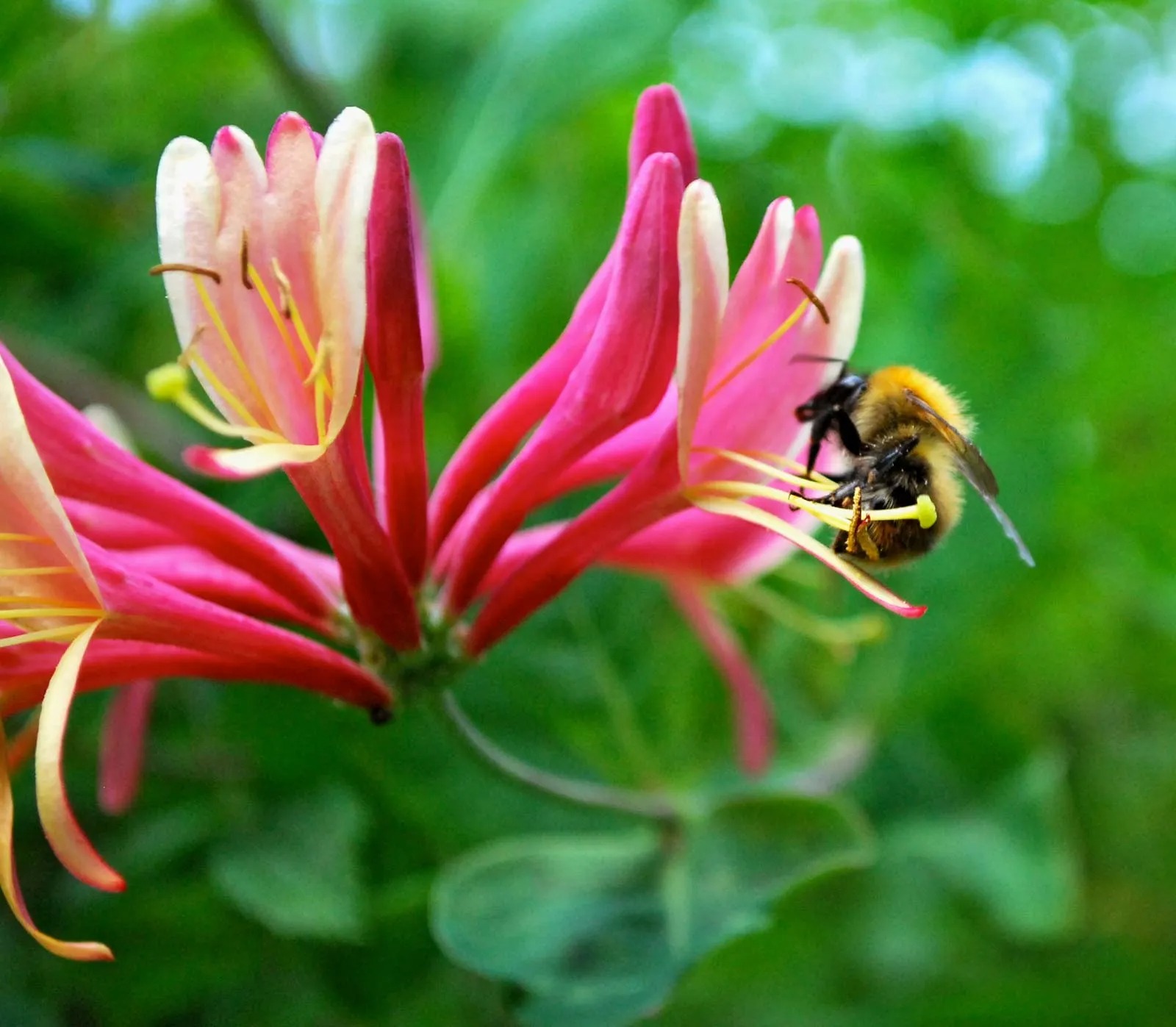
Honeysuckle (Lonicera Caprifolium Mill.) is a genus of arching shrubs or twining vines belonging to the Caprifoliaceae family, native to the Northern Hemisphere.
How many species of Honeysuckle exist and where are they found?
There are about 180 species of Honeysuckle, with 100 species found in China, and approximately 20 native species each in Europe, India, and North America.
What are some common species of Honeysuckle?
Notable species of Honeysuckle include Lonicera periclymenum (honeysuckle or woodbine), Lonicera japonica (Japanese honeysuckle, white honeysuckle, or Chinese honeysuckle), and Lonicera sempervirens (coral honeysuckle, trumpet honeysuckle, or woodbine honeysuckle).
Why are hummingbirds attracted to Honeysuckle flowers?
Hummingbirds are attracted to the flowers of certain Honeysuckle species, especially L. sempervirens and L. ciliosa (orange honeysuckle), due to the sweet nectar they produce.
What is the origin of the name “Lonicera”?
The name "Lonicera" is derived from Adam Lonicer, a Renaissance botanist who is credited with naming the plant.
What is the growth habit of most Honeysuckle species?
Most species of Honeysuckle are hardy, twining climbers, though some species are shrubby. A few species, like L. hildebrandiana and L. etrusca, are tender and grow only in subtropical zones.
What do the leaves of Honeysuckle plants look like?
The leaves of Honeysuckle plants are opposite, simple, oval in shape, and range in size from 1–10 cm long. While most are deciduous, some species have evergreen leaves.
What are the flowers of Honeysuckle plants like?
Honeysuckle flowers are sweetly scented, bilaterally symmetrical, and often produce sweet, edible nectar. Most species' flowers are borne in clusters of two, leading to the common name "twinberry" for some North American species.
What is the structure of Honeysuckle stems and their uses?
Honeysuckle stems are strongly fibrous and have historically been used for binding and textile purposes.

Inquire for Your Company's Wholesale Requirements.
Inquire NowWhat type of berries do Honeysuckle plants produce?
Honeysuckle plants produce red, blue, or black spherical or elongated berries containing several seeds. Most species' berries are mildly poisonous, although some species like Lonicera caerulea have edible berries.
How do Honeysuckle berries contribute to wildlife?
Honeysuckle berries are attractive to wildlife, which has led to some species becoming invasive outside their native ranges, such as L. japonica and L. maackii.
How have some Honeysuckle species become invasive?
Certain Honeysuckle species, such as L. japonica, L. maackii, L. morrowii, and L. tatarica, have become invasive when introduced outside their native regions, especially in places like New Zealand and the United States.
What makes Honeysuckle plants popular in gardens?
Honeysuckle plants are valued in gardens for their ability to cover walls and outbuildings, their profuse tubular flowers in summer, and their intense fragrance.
How do Honeysuckle plants grow in different light conditions?
Hardy climbing Honeysuckles need their roots in shade while their flowering tops should receive sunlight or light shade.
What medicinal uses does Honeysuckle have?
Honeysuckle is used in traditional medicine for digestive disorders, upper respiratory tract infections, viral and bacterial infections, inflammation, fever, sores, urinary disorders, headache, diabetes, and rheumatoid arthritis.
How is Honeysuckle applied for skin conditions?
Honeysuckle is sometimes applied topically to treat inflammation, itching, and to kill germs.
What makes Lonicera Caprifolium Mill (Italian Honeysuckle) special in perfumery?
Lonicera Caprifolium Mill is renowned for its sweet, floral scent, making it an excellent choice in perfumery for its long-lasting, intoxicating fragrance.
How does Lonicera Caprifolium Mill enhance perfume compositions?
Lonicera Caprifolium Mill enhances the complexity and depth of perfumes, offering a honey-like aroma that blends well with floral and citrus notes.
How is Honeysuckle used in fragrance formulations?
Due to its strong odor, Honeysuckle is rarely used in large quantities but can be added in small amounts to enhance the floral accords of Rose or Jasmine, boosting the middle notes.
How does Honeysuckle affect Oriental fragrance blends?
Honeysuckle’s powerful floral character makes it an interesting ingredient in Oriental fragrance blends, providing a strong floralizer for the middle notes.
Why Choose BMV Fragrances?

Premium Quality:
100% pure and natural essential oils, resinoids, absolutes, and fragrance oils, ensuring unmatched quality.

Innovation-Driven:
Continuous investment in R&D to stay ahead of trends and deliver innovative solutions.

Global Leadership:
Trusted by top brands worldwide for excellence in fragrance production.

Extensive Range:
A wide variety of essential oils, perfume oils and fragrance oils to meet diverse industry needs.

Strict Quality Control:
Every batch undergoes rigorous checks for consistent, high-quality products.

Competitive Pricing:
Top-tier products at competitive prices for great value.
Source directly from manufacturer.
Call Now!
FAQs on Honeysuckle Essential Oil

Copyright @ 2026 | BMV Fragrances Private Limited | All Rights Reserved
Website Design & Digital Marketing by webmasterindia.
Website Updated On: